

The 8pm Rule: What Happens When You Finally Protect Your Evenings
Plus a free Morning + Evening Ritual Audit to help you find your own version.
A few years ago I started treating 8pm like a boundary. It’s not my bedtime, it’s my transition time. The moment when I stop being available to the noise of the day and start belonging to myself again. It sounds small. It changed more than I expected.
Here's what it actually looks like in my house, because I think specifics matter more than principles when it comes to this stuff.
My phone goes away at 7pm. Not silenced, not face-down — away. My hubs and I watch TV until 8, which is its own kind of wind-down: low stakes, together, not thinking about anything in particular. At 8, I turn into a pumpkin. If I'm not moving toward the bedroom by then, something in me starts to protest.
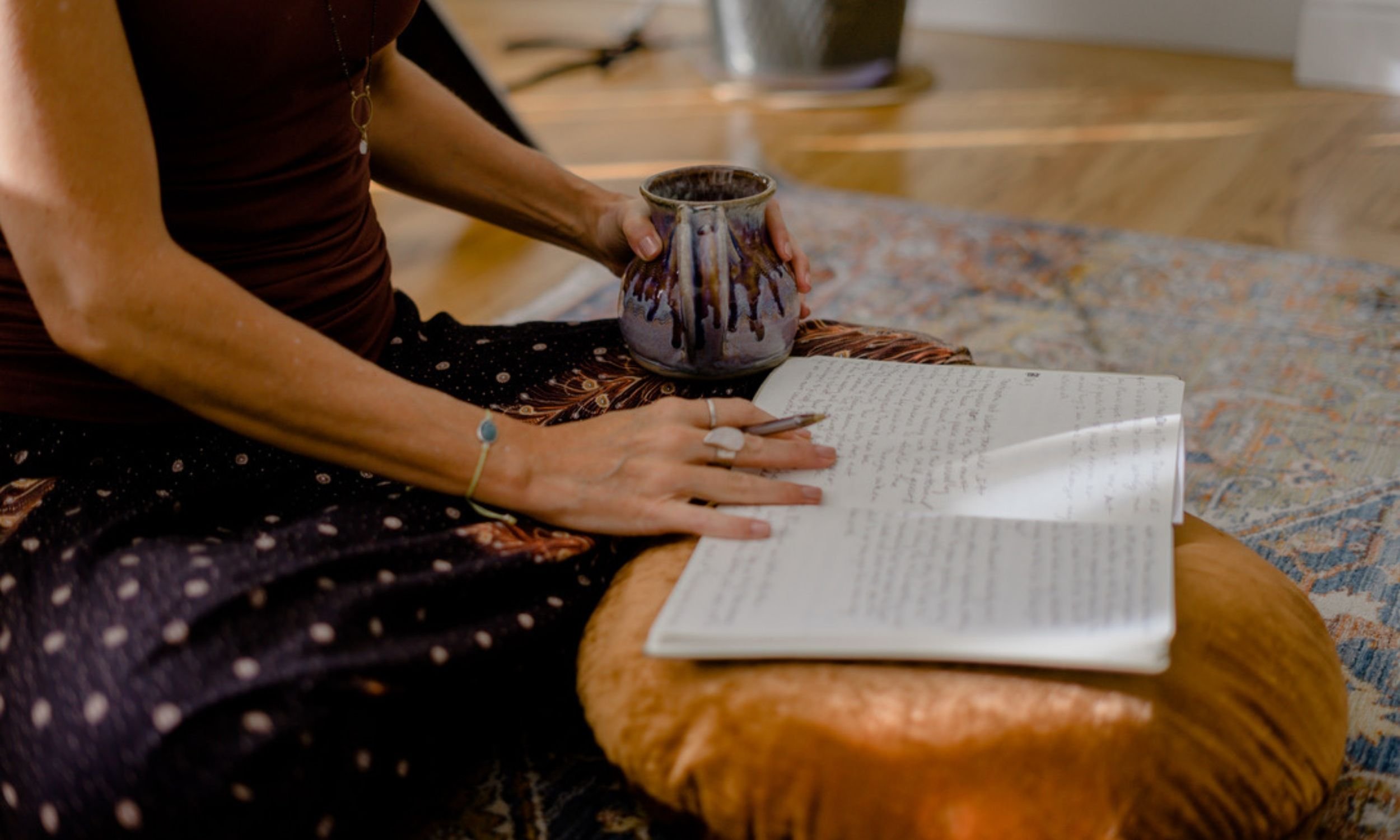
The bedroom is set up for calm. There's a special anti-blue light bulb in the nightstand lamp — that's the only light on. The window is open, especially in winter, because we sleep better in a cold room. I’ve go my nighttime tea. I take my time getting ready: washing my face, brushing and flossing, the whole unhurried ritual of it. Once I'm in bed, I journal or read until 9. Then I use my Sensate — a vagus nerve regulating tool that rests on my chest for 10 to 15 minutes while it hums — and then it's lights out.
No calls, texts, or emails after 8pm. Friends and family know I won't get back to them until the next day. Work is categorically off the table. News doesn't exist.
All the material markers — the lamp, the tea, the cold air, the particular order of things — help me mentally shift. They're signals my nervous system has learned to recognize: this is the downshift. This is where the day ends. I have a sensitive system and an active mind, and stepping away from screens at least an hour before bed isn't optional for me. It's the difference between sleeping and just lying there.
I look forward to it every single night. (And I love it when I can sneak in a little earlier.)
Why This Isn't Just About Sleep
I want to be clear that I'm not writing about sleep hygiene. Or not only about that.
I'm writing about energy — where it comes from, how it's built, and how quietly it gets spent before we even notice it's gone. Earlier this year, our studio theme was building energy and stamina, and one of the things I kept coming back to is this: most of us think about energy as something we generate during our workout or our yoga practice. But the real architecture of energy is built in the hours around those things. Especially the first and last hour of the day.
Your morning sets the nervous system tone for everything that follows. Your evening determines whether you actually recover — or whether you just technically sleep and wake up already behind.
When I started protecting my evenings, I didn't expect it to change my mornings. But it did. I started waking up before my alarm, which had never been my experience. I had more mental clarity before 9am than I used to have at 2pm. My practice felt different — more available, less effortful. Not because I'd changed my practice, but because I was arriving at it from a different place.
The Morning Side of the Equation
I've focused on evenings because that's where many of us leak the most energy — the late scrolling, the news before bed, the one more email, the slow fade into sleep rather than an intentional transition into it. But mornings matter just as much, and they're worth examining with equal honesty.
Not the aspirational morning. Not the 5am journaling, cold plunge, green smoothie version that looks good on Instagram. The actual morning — what you're really doing from the moment you wake up to the moment your day properly begins.
For a lot of women, that window has been quietly overrun. The phone comes in before the first cup of coffee. The inbox before breakfast. The news before you've had a single thought of your own. And then we wonder why we feel reactive all day, why our nervous system never quite settles, why we're tired before we've done anything. (For those of you with kids, this is a real factor and your time is often not your own. Can you still avoid your phone first thing? Can you steal 5 minutes for a bathroom meditation?)
What would it mean to protect that first hour the way I protect the last one?
I'm not prescribing an answer. I'm genuinely asking, because I think the answer is different for everyone — and most of us have never actually stopped to consider what we'd choose if we were choosing intentionally.
An Audit, Not an Overhaul
This is the part where I'd usually say something like "here are five steps to a better morning routine." I'm not going to do that, because I don't think a prescriptive routine is what most of us need. What we need is to look honestly at what we're actually doing — and then decide, with clear eyes, what we want to keep, what we want to release, and what we want to gently update.
That's exactly the kind of thinking we've been doing at It's All Yoga this month. March is our Spring Clean Your Practice month — a chance to bring the same honest, unattached lens we might use on a closet to our movement habits, our daily rhythms, and the routines we've accumulated without necessarily choosing.
I put together a Morning + Evening Ritual Audit as part of this month's materials, and I want to share it with you here. Download the Morning + Evening Ritual Audit →
It's two pages. It walks you through both ends of the day with simple questions — not to make you feel behind, but to help you see clearly what's actually happening and what you might want to shift. It takes about ten minutes to fill out, and I think you'll be surprised what surfaces.
A Few Things Worth Questioning
While you have the audit in hand, here are the specific things I'd invite you to look at most honestly:
When does your phone come back into your day? Not when you intend for it to — when it actually does. For most of us, it's the first thing we reach for in the morning and the last thing we set down at night. That's not a moral failing; it's by design. But it's worth seeing clearly.
Do you have a transition moment at the end of the day? Not a wind-down routine necessarily — just a marker. Something that signals to your body and mind: this is where the doing stops. It can be making tea. Changing clothes. Stepping outside for five minutes. The specific thing matters less than the fact that something marks the shift.
How do you feel when you wake up? Not compared to how you felt at 25 — compared to how you feel after your best nights. If there's a significant gap, it's worth tracing backward. What was different on the good nights?
What's the first thing that gets your attention in the morning? The answer to this question shapes more of your day than almost anything else.
You Don't Have to Rebuild Everything
The ritual I described at the top of this post took years to assemble. I didn't sit down one evening and implement all of it. The anti-blue light bulb came first. Then the phone boundary. The Sensate was more recent. It accreted, slowly, as I paid attention to what was actually helping and added more of that.
Your version won't look like mine. It shouldn't. What matters is that it's intentional — that you're choosing it, rather than defaulting into it.
The audit is a starting point, not a prescription. Fill it out, notice what you notice, and then change one thing. Just one. See what happens over the next few weeks before you decide whether to change anything else.
That's the kind of slow, honest practice that actually builds energy over time. Not a routine overhaul, just your own loving attention.
Download the Morning + Evening Ritual Audit — two pages, ten minutes, and a chance to finally see your days clearly. Get it here →
If this resonates, this is exactly the kind of work we do together at It's All Yoga — a virtual studio for women in midlife who are done with punishing practices and ready for something more honest. Come take a look at what we’re up to this month →

Michelle Marlahan has been teaching yoga since 2001 and is the founder of It's All Yoga. She teaches from her home in West Sacramento, alongside her cat Magic and her dog Maple.