

Perimenopause Fatigue Is Real. So Is Spring Fatigue. In March, You're Dealing With Both.
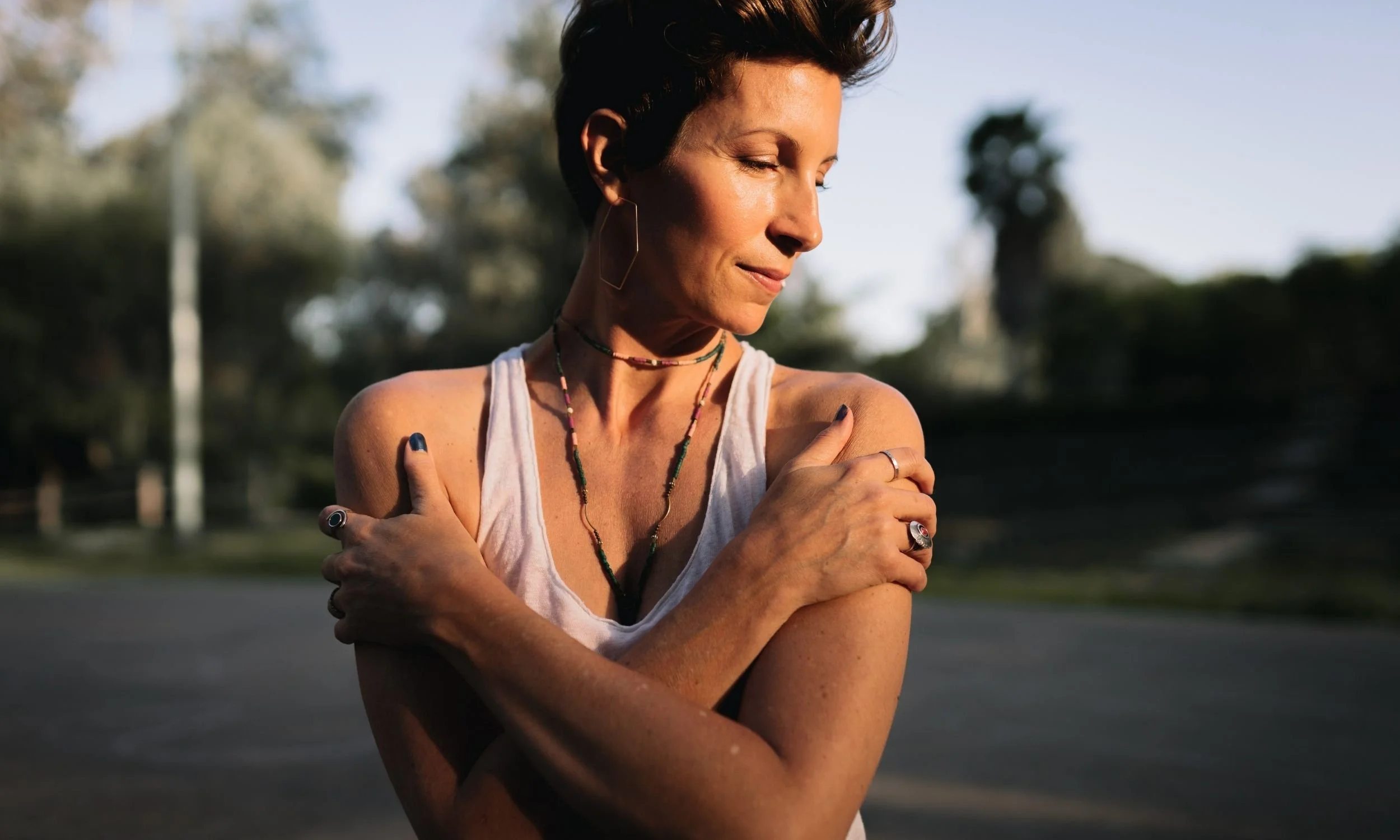
There's a particular kind of tired that can show up in March. Not sick-tired. Not even I-need-a-nap tired. It’s the kind where you wake up already behind, move through your morning like you're wading through something thick, and everything feels harder than it should.
Maybe you're also restless — that particular kind of tired where your body is exhausted but your mind won't settle. Maybe your motivation for things, including your practice, has evaporated. Maybe you feel behind, vaguely off, not like yourself, and you can't quite put your finger on why.
Here's what I want you to know: you're not imagining it.
March is genuinely hard on the body. And if you're in perimenopause or menopause, it's layered on top of a system that's already navigating enormous change. The exhaustion you're feeling isn't weakness – it's information. And once you understand what's actually happening, you can respond to it with something more useful than pushing harder or feeling guilty for not pushing harder.
Let's Talk About What's Actually Going On
Several things converge in March that, individually, would each be worth paying attention to. Together, they can quietly flatten you.
Daylight saving time. Let's just name it — it's brutal. Losing an hour of sleep sounds minor until you remember that your circadian rhythm is not a casual suggestion your body makes to itself. It's a deep biological timing system that governs everything from cortisol release to body temperature to when your digestive system expects food. Disrupting it by even an hour has measurable effects on sleep quality, mood, cognitive function, and energy — effects that don't resolve in a day or two for most people, and that hit harder the more sensitive your system is.
Shifting light. Even before the clocks change, the days are lengthening. This sounds like good news, and eventually it is. But in the transition, your body is recalibrating. Melatonin production adjusts, cortisol patterns shift, your sleep architecture changes. For women with sensitive nervous systems — and a lot of us have them — this recalibration period can feel like low-grade dysregulation. Not sick exactly. Just... off.
Seasonal transition load. There's a reason "spring fatigue" is a recognized phenomenon. The body uses significant resources to adapt to seasonal change — shifting immune function, adjusting to temperature fluctuations, responding to changes in barometric pressure and humidity. This is real physiological work, even when it's invisible. You're not doing nothing while you sit there feeling tired. Your body is busy!
Perimenopause and menopause. And then there's this — the backdrop that colors everything else. Fluctuating estrogen and progesterone affect sleep directly, often causing lighter sleep, more nighttime waking, and less time in the deep restorative stages. They affect the nervous system's ability to regulate and recover. They affect how your body responds to stress, including the low-grade stress of seasonal transition. And they affect cortisol in ways that can leave you wired when you want to be calm and flat when you want to be energized.
Put all of this together and you have a body that is working significantly harder than usual just to maintain baseline. Add your regular life on top of that, and the tiredness makes complete sense.
The Instinct to Push Through — and Why It Backfires
Here's where I want to gently push back on something most of us do automatically when we feel this way: we decide we need to do more.
More movement. More discipline. More green vegetables and earlier bedtimes and getting back on track. As if the fatigue is a deficit to be corrected through effort.
I understand the impulse. It's the same impulse that makes you feel guilty about a skipped workout or a practice that felt like nothing. It's the wellness culture we've all been swimming in for decades — the idea that the right response to feeling bad is always to try harder.
But when your nervous system is already under load — already doing the quiet work of seasonal recalibration, already managing hormonal fluctuation, already absorbing the disruption of lost sleep — adding intensity is often the last thing it needs. It's not more fuel for the fire. It's more demand on a system that's already stretched.
This doesn't mean do nothing. It means do differently.
What Actually Helps
This is the part I want you to sit with, because it runs counter to a lot of conventional fitness advice.
Shorter, slower, more consistent movement tends to serve the nervous system better than intense, occasional effort during periods of high load. A 15-minute walk. A gentle yoga practice that prioritizes breath and ease over challenge. Strength work at moderate intensity rather than pushing for new personal records. Not because you're not capable of more — because you're conserving resources for what your body is already doing behind the scenes.
Restorative practices are not the consolation prize. Legs up the wall, supported bridge, a long savasana, a slow yin class — these aren't what you do when you're too tired for "real" yoga. They are real yoga. They actively support nervous system regulation, which is exactly what's needed when your system is under seasonal and hormonal load. If you've been dismissing restorative practice as not enough, March is your invitation to reconsider.
Breath is disproportionately powerful right now. Slow, extended exhales activate the parasympathetic nervous system — the rest-and-digest state your body needs more of when cortisol is dysregulated. Even five minutes of deliberate breathing — longer exhale than inhale — can shift your nervous system state in measurable ways. This isn't woo. It's physiology. And it's something you can do anywhere, anytime, without a mat.
Sleep protection is non-negotiable. I know this sounds obvious, but I mean it more specifically: in March, sleep is not the thing you cut to get everything else done. It's the thing you protect even when it feels inconvenient. Every other healthy habit you have works better when you're sleeping. Every symptom of perimenopause is amplified when you're not.
Notice what depletes and what restores — and take that information seriously. Some people find that vigorous movement helps with spring fatigue. Others find it makes everything worse. The honest audit of your own experience matters more than any general guideline, including mine. Your body is giving you feedback constantly. March is a good month to actually listen.
A Reframe Worth Sitting With
I want to offer you something before you close this tab and go back to your day.
The fatigue you feel in March is not evidence that something is wrong with you. It's simply evidence that you're a biological creature responding appropriately to real demands — seasonal, hormonal, circadian — that are genuinely significant.
Your body isn't resisting spring or being difficult. It's moving through a transition that takes real resources. That's the work of being alive in a body that's paying attention.
The most useful thing you can do with that information isn't to override it. Instead, work with it — scale your demands to match your capacity, offer your nervous system what it actually needs, and trust that the energy will return when the transition settles.
If I could give a “prescription,” it would be:
One part compassion, one part tenderness, with an exhale and a side of humor.
What We're Doing About It at the Studio
This is exactly the kind of thing we pay attention to at It's All Yoga — how the season, the body, and the practice intersect, and what that means for how we move right now. March is our Spring Clean Your Practice month, which is less about doing more and more about doing what's actually right for the body you're in today.
If you want to practice in a space that takes your nervous system seriously — that builds in restoration, scales to real life, and doesn't ask you to perform wellness while exhausted — come take a look at what we're doing this month.

Michelle Marlahan is the founder of It's All Yoga, a virtual studio for women in midlife. She has been teaching since 2001 and specializes in the intersection of yoga, strength, and the particular wisdom of a body that's been through some things.